
3 Destructive Storage Mistakes That Can Ruin a Classic Leather Belt and What You Can Do to Avoid Them
Jun 5th 2026
Destructive storage mistakes that can ruin a classic leather belt include storing it in humid conditions and rolling it too tightly. Hanging it by the buckle for extended periods can also contribute to premature wear.
Fortune Business Insights reveals that more than 220 million U.S. consumers purchase fashion accessories annually, including belts and wallets. Leather wallets and belts represent approximately 65% of accessory purchases among male consumers.
Proper belt hanging methods and luxury accessory storage practices help preserve the shape and condition of leather over time. With preventive storage habits, you can extend the lifespan of your favorite classic leather belt.
What Are 3 Destructive Storage Mistakes That Can Ruin a Classic Leather Belt?
According to Data Intelo, the Genuine Leather sub-segment represented the largest share at 58.3% of global revenues in 2025. This is equivalent to approximately $3.73 billion.
Consumers prefer authentic leather's superior durability and patina development. These factors influence the perceived overall quality.
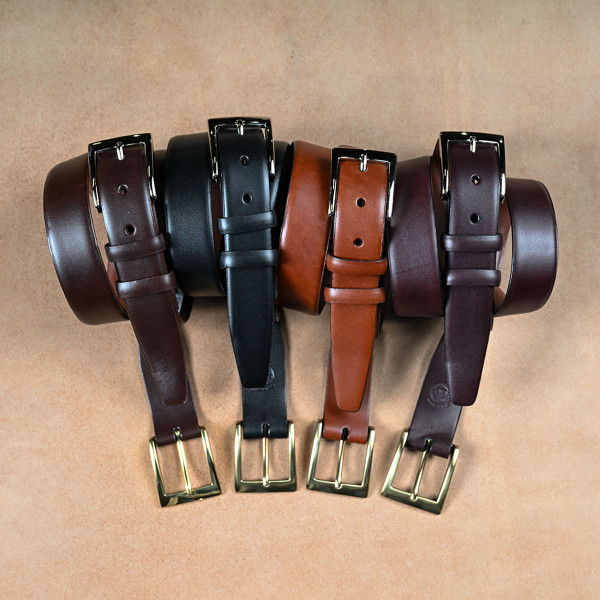
A classic leather belt has become so much more than a functional wardrobe staple. Leather belts are versatile and timeless fashion accessories that can easily pull together an effortless look.
Keep your leather belts in tip-top shape by following these 3 Do's and Don'ts for proper storage and routine care here.
1. Leaving the Belt Rolled Too Tightly for Long Periods
A common storage mistake is rolling a leather belt too tightly and placing it in a drawer. It creates constant pressure on the same bend points and gradually stresses the leather fibers.
Over time, the material develops permanent curvature that is difficult to reverse. In more advanced cases, repeated stress can lead to cracking and a loss of flexibility.
How to avoid it:
Store belts in a way that keeps their natural shape intact. Hanging them vertically on a rack is ideal for wardrobe organization and leather creasing prevention.
If rolling is necessary, keep the roll loose and avoid compressing the leather layers against each other. Occasionally rotating the roll's direction can also reduce long-term deformation.
2. Storing in Humid or Poorly Ventilated Spaces
Leather is highly sensitive to moisture and environmental conditions. When stored in humid or poorly ventilated areas such as bathrooms and basements, it can absorb excess moisture.
Using sealed plastic bins for storage is another common mistake. This often leads to mold growth and surface staining.
Even when mold is not visible, prolonged exposure can still result in stiffness and dullness. Excess moisture contributes to a gradual weakening of the leather structure.
How to avoid it:
Choose a storage space with steady airflow and low humidity. A closet shelf or open drawer works best because it allows the leather to breathe.
In more humid climates, utilizing silica gel packets nearby regulates closet moisture control.
3. Hanging from the Buckle for Extended Periods
Another overlooked issue is hanging a belt from its buckle for long periods. This method places all the weight on a single attachment point.
Doing so slowly stretches the leather near the buckle. Prolonged hanging causes uneven tension and warping. Loosening around the hardware may also occur.
Heavier or full-grain leather belts are particularly susceptible.
How to avoid it:
Support the belt along its full length whenever possible. A dedicated belt hanger or a wide horizontal bar distributes weight more evenly.
Avoid narrow hooks that create pressure points and concentrate stress in one area. Making a simple adjustment helps preserve the belt's structure and lifespan.
Is Real Leather Actually More Durable Than Faux Leather?
Minimal and Modern reports that faux leather has an average lifespan of just 2 to 5 years (up to 10 with proper care). Real leather has a lifespan of 20-40 years or more with necessary maintenance and upkeep.
Real leather also tends to handle daily stress more effectively. Its natural fibers resist stretching and wear better than most synthetic alternatives.
Faux leather can look appealing when new, but repeated bending often causes the surface layer to crack or peel. Fake leather is more affordable than real leather. However, what you save in cost, you lose in overall quality.
A premium American-made leather belt maintains its appearance for decades. It's a practical long-term investment.
How Often Should You Condition a Leather Belt?
Leather requires occasional conditioning to maintain its flexibility and appearance. Without proper care, the material can dry out and become more susceptible to cracking.
Most leather care experts recommend conditioning a leather belt 2 times per year, every 6 to 12 months (LeatherHelper). Belts exposed to dry climates or frequent wear may benefit from more frequent treatment, 3 to 4 times per year or more, as needed.
Apply a leather conditioner sparingly and follow the manufacturer's instructions. Over-conditioning can leave residue on the surface and soften the leather excessively.
Regular conditioning helps preserve the belt's natural oils. Conditioning also supports long-term durability and a richer appearance over time.
Frequently Asked Questions
Should My Leather Belt Match My Shoes?
Yes. Matching your belt and shoes creates a coordinated look. It helps maintain visual balance in an outfit.
Exact matching isn't always required. Similar tones and finishes work well.
The goal is overall harmony in color and texture rather than perfect duplication.
What Color Leather Belt Is Most Versatile?
Black and brown are the most versatile belt colors. Black works well with formal outfits and darker footwear.
Brown pairs easily with casual and business casual styles. Neutral tones help simplify outfit coordination.
These colors ensure broader compatibility across most wardrobe combinations.
Can You Wear A Leather Belt Casually?
Yes. Leather belts work well in casual outfits. They pair easily with jeans and everyday wear.
Softer finishes create a relaxed appearance. Heavier or textured leather adds a rugged style.
Belts can function as both a practical accessory and a subtle fashion statement.
Elevate Your Wardrobe with a Classic Leather Belt from Torino Leather Today
A classic leather belt wardrobe essential that blends function with style. It offers structure to everyday outfits and adds a refined finishing touch. With proper care, it retains its shape and appearance for years.
Torino Leather, located in New Orleans, LA, offers a wide array of American-made leather belts for all occasions. Torino Leather belts combine traditional craftsmanship with modern styling and complimentary 2-day shipping on all orders, so you don't have to wait to look great. We also have wallets and bracelets for a coordinated style.
Shop our full collection of leather belts on our website today.